Canadian Jewellers: Buying Lab-Grown Diamonds Wholesale From India
India's gem and jewellery exports to Canada more than doubled in 2025-26. What Canadian jewellers should stock, what to budget for at the border, and how to keep repeat orders consistent.
From Vancouver to Halifax, Canadian jewellers report steady demand for lab-created diamonds, in engagement rings first and increasingly in everyday jewellery. Trade with India is rising with it: GJEPC figures show India's gem and jewellery exports to Canada more than doubled in 2025-26, up 115% to about US$320 million. If you are building your own range, buying loose stones directly from an Indian manufacturer lets you control quality and margins. Here is how to set it up.
What to stock first
Centre stones
Round, oval and emerald cuts from 0.70 to 2.00 ct with IGI reports cover most Canadian engagement requests.
Melee
Matched EFG VS–SI melee for halos, pavé and eternity bands; see our melee guide.
Fancy shapes
A few pears, radiants, cushions and marquises for bespoke clients.
Choosing a supplier
- Every document says laboratory-grown, with growth method (CVD or HPHT) and any post-growth treatment.
- A current price list or fast written quotes in US or Canadian dollars, with a validity date.
- Consistent matching across repeat parcels, and a written policy on replacements.
- Experience shipping to Canada, with insured carriers who handle brokerage.
Border costs
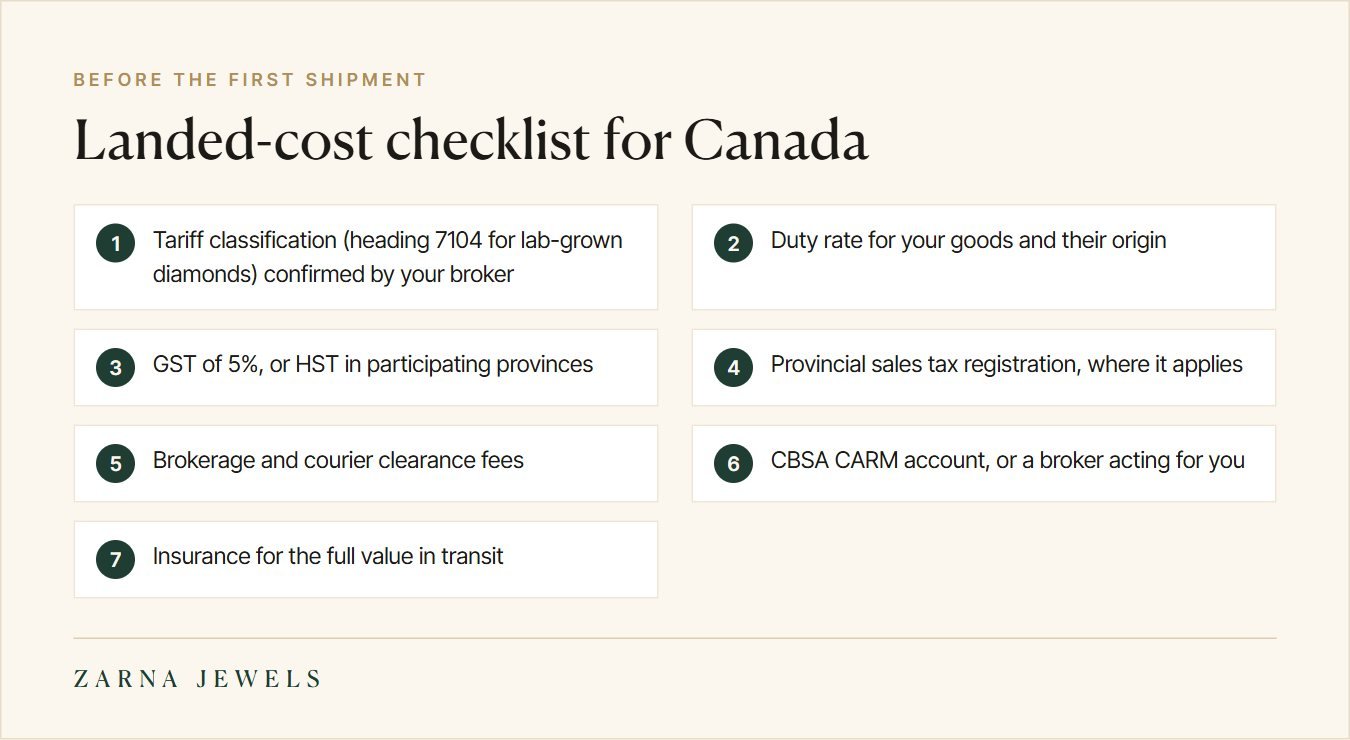
Canada has no free trade agreement with India, so check the tariff treatment of your goods with your customs broker before the first shipment. On top of any duty, budget for GST of 5% (or HST in participating provinces), provincial sales tax registration where it applies, and brokerage fees. Since the CBSA's CARM system went live in October 2024, importers pay duties and taxes through a CARM account, or let a licensed broker do it for them.
Marking and describing
If you stamp a quality mark such as 14K or 585 on a piece sold in Canada, the Precious Metals Marking Act requires an accurate mark and a registered Canadian trademark beside it. And describe stones clearly: Canadian shoppers search for "lab grown", "lab created" and "man made" diamonds, so use those words naturally on your website, and always qualify the word diamond for grown stones. Our guide to diamond names and the rules explains the terms.
Keeping supply steady
- Start with a sample order and set a few stones before committing.
- Agree price validity periods; lab-grown prices move.
- Hold your best-selling sizes in stock and order special stones on demand.
- Keep reports and invoices together for your customers' insurance and appraisals.
For the paperwork step by step, see our importing checklist; for what Canadian consumers ask before buying, see how much Canadians spend on an engagement ring.
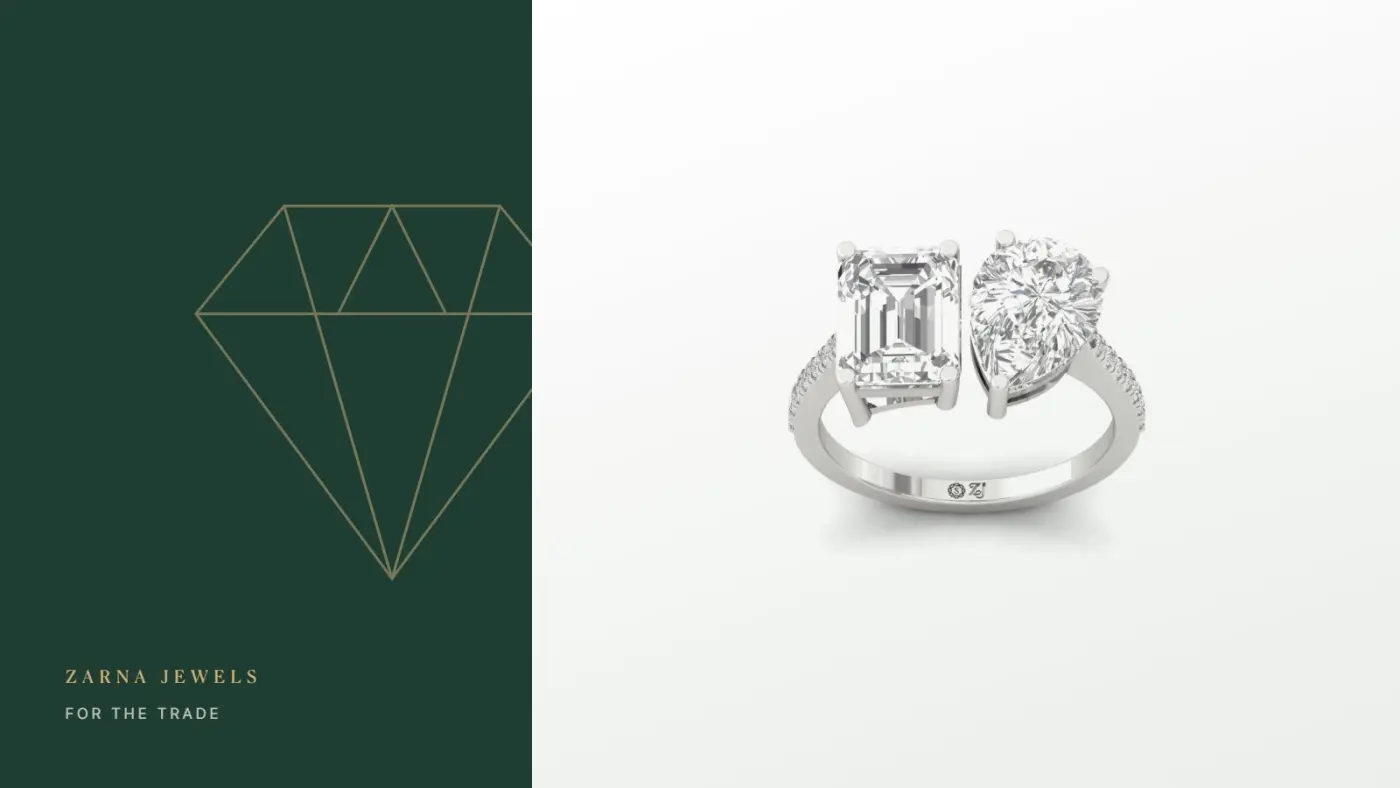
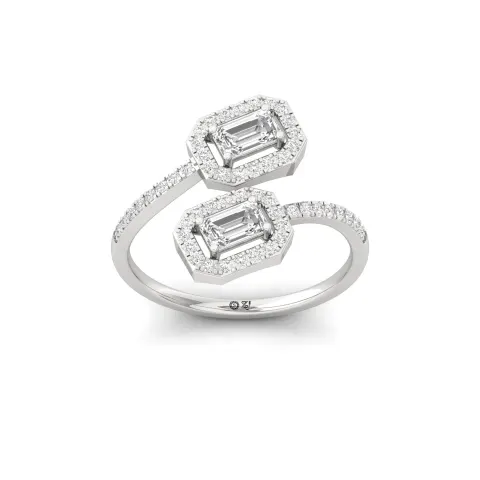
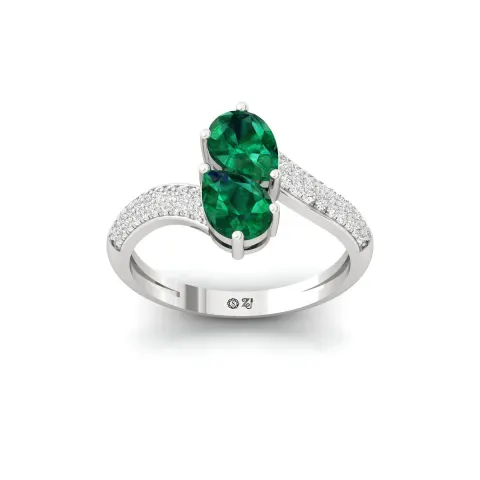
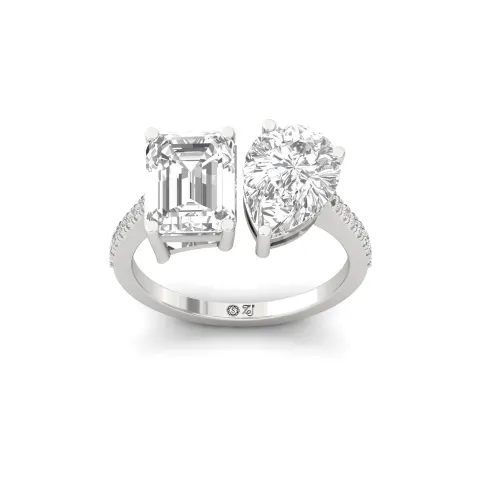
Emerald-cut rings from our Surat workshop
Working with us
Sheladiya Diamond, the family business behind Zarna Jewels, cuts and polishes CVD diamonds in Surat. Canadian jewellers can search our loose stock, place 24-hour holds and order through Zarna B2B; every stone is checked by our team before you pay.
Is there a trade agreement between Canada and India for jewellery?
Not at present. Duty depends on the tariff classification and origin of the goods; your broker can confirm the rate.
Do I pay GST on imported diamonds?
Yes, GST or HST applies on import. Registered businesses can usually claim input tax credits.
What is CARM?
The CBSA Assessment and Revenue Management system, through which importers account for and pay duties and taxes. A broker can act for you.