
How to Insure Lab-Grown Diamond Jewellery (UK, USA and Australia)
Your ring is probably worth more than your home policy's single-item limit. How to insure lab-grown diamond jewellery properly, and why insuring it at a natural diamond's value is a mistake.

An engagement ring is one of the few things people wear every day that is worth more than their phone. Most home insurance policies cap any single item at a modest amount unless it is listed separately, so a ring can be under-insured without anyone noticing. Lab-grown diamonds add one more wrinkle: insure them at their own replacement value, not a natural diamond's. Here is how to get it right in the UK, the USA and Australia.
Step one: read your current policy
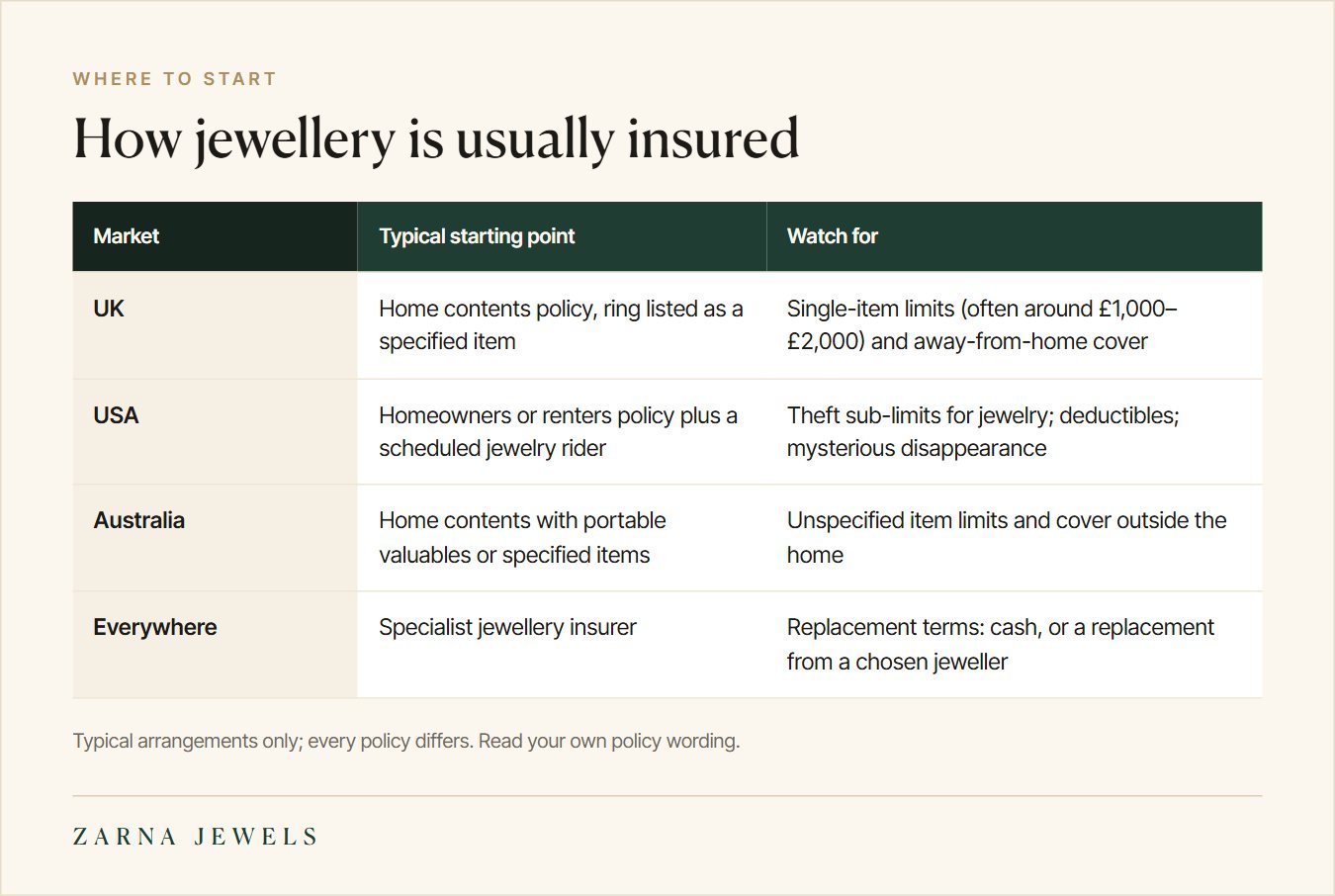
Look for three numbers: the single-item limit, the limit for valuables in total, and whether jewellery is covered away from home. If your ring is worth more than the single-item limit, it needs to be listed by name, or insured with a specialist.
Your options
Specified item on home cover
Listing the ring on your home policy is usually simple and affordable. Check that it covers loss and accidental damage, at home and away.
Scheduled rider (USA)
A rider or floater on a homeowners or renters policy covers the ring for its listed value, often with no deductible.
Specialist jewellery insurer
Broad cover worldwide, and replacement through a jeweller you choose. Compare their terms with your home insurer's.
Why the valuation must say lab-grown
A natural diamond and a lab-grown diamond of the same size and grade have very different replacement values. If your valuation describes a lab-grown stone as if it were natural, you pay a higher premium for cover you could never claim: insurers settle on what it costs to replace what you actually had. Make sure the valuation, the invoice and the grading report all say laboratory-grown, with the stone's weight, colour, clarity and cut.
The documents to keep
- The invoice showing what you paid, including any duties or taxes on import.
- The grading report for the centre stone, with its number.
- A written valuation describing the piece and its replacement value.
- Clear photos of the ring, and of the girdle inscription if you can.
- A copy of all of these stored away from the jewellery itself.
We provide valuation documents for pieces we make; see our jewellery valuations page. Every order travels insured until it is signed for, so cover starts the moment it is in your hands.
Small habits that prevent claims
Most lost diamonds fall out of worn prongs, not dramatic thefts. Have settings checked once a year, take rings off for the gym, pool and gardening, and keep each piece in its own pouch. Our guides to when to re-tip prongs and travelling with jewellery go further; Canadian readers will find a local version in our Canada insurance and appraisal guide.
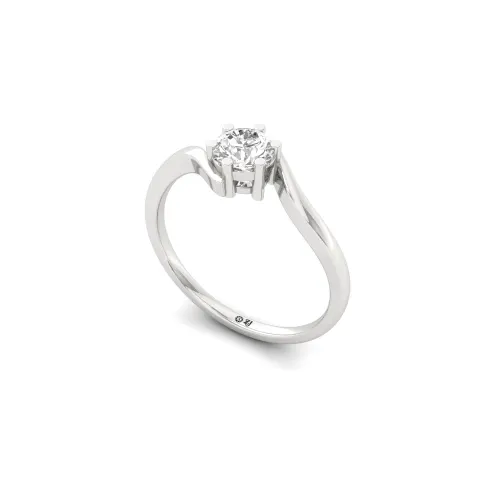
Solitaire engagement rings from our workshop


Should I insure a lab-grown diamond ring?
Yes, if losing it would hurt your finances. Insure it at its lab-grown replacement value, with the stone described as laboratory-grown.
Is a lab-grown diamond cheaper to insure?
Usually, because premiums follow the insured value, and lab-grown replacement values are lower than natural ones for the same size and grade.
How often should jewellery be revalued?
Every two to three years, or after big changes in gold or diamond prices.


