
How to Choose Diamond Stud Earrings: A 2026 Buying Guide
Learn how to choose diamond stud earrings by shape, carat weight, cut, setting, metal and comfort, with practical guidance for everyday wear and gifting.
Diamond stud earrings remain one of the most versatile pieces in a fine-jewellery collection. They can work with an office outfit, a wedding look, an evening dress or a simple weekend wardrobe. In 2026, search interest is moving toward more specific jewellery choices. UK search research for January–June 2026 recorded 7,338 monthly searches across the diamond stud earring cluster, up 7% year over year, while “diamond stud earrings for women” was among the notable rising searches. Search figures vary by platform and country, but the direction is useful: shoppers are looking for practical guidance before choosing a pair.
At Zarna Jewels, our lab-grown diamond earring collection includes studs, hoops and drop designs, with multiple diamond shapes and metal options. This guide focuses specifically on diamond studs and explains what to consider before ordering.
What Makes Diamond Stud Earrings So Versatile?
A stud earring keeps the main visual focus close to the earlobe. Unlike a long drop or chandelier design, it does not depend on movement or a large silhouette to make an impression. That makes studs particularly useful when you want one pair that can transition between different occasions.
For first-time buyers, studs can also be easier to style because the design is comparatively simple. A round brilliant stud gives a classic appearance, while pear, emerald, princess, marquise and other shapes can create a more distinctive look.
1. Choose the Diamond Shape First
The shape is one of the easiest ways to define the character of a pair of diamond studs.
- Round: A classic choice with strong brilliance and broad styling flexibility.
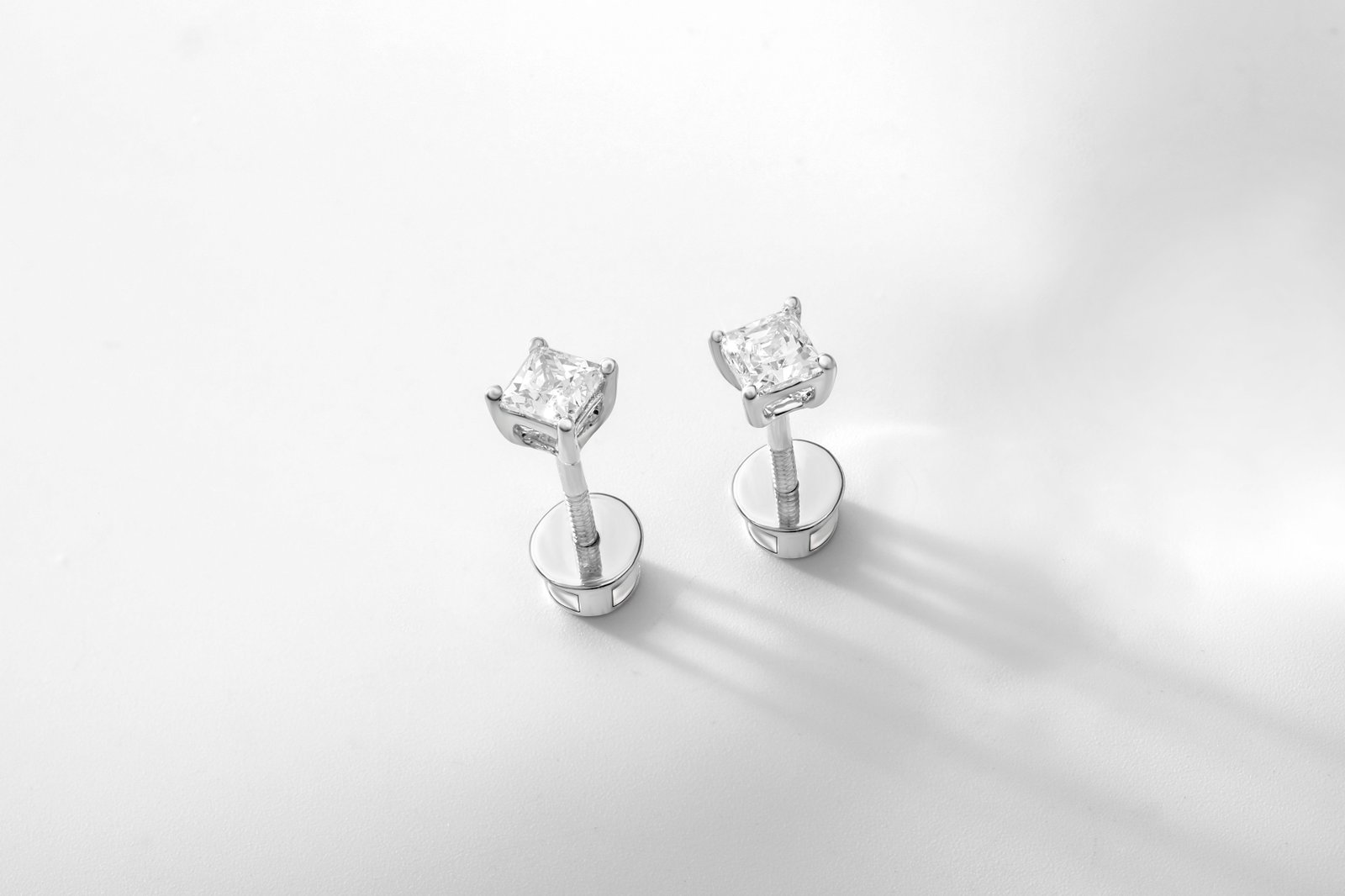
- Princess: A square outline that gives a crisp, contemporary appearance.
- Emerald: An elongated rectangular shape with a step-cut appearance and a refined, architectural feel.
- Pear: A teardrop silhouette that adds a softer directional look.
- Marquise: An elongated shape that can visually extend the earlobe.
- Oval: A balanced elongated outline without pointed ends.
- Baguette and modified cuts: Useful when you prefer a geometric or contemporary style.
There is no universally correct shape. The best choice depends on your personal style, the setting and how the earrings will be worn.
2. Understand Carat Weight for a Pair
When comparing earrings, check whether a quoted carat weight refers to one diamond or the total carat weight of the pair. Jewellery listings may use “total carat weight” or “TCW” to describe the combined weight of all diamonds.
Two earrings with the same total carat weight can still look different because of diamond shape, face-up dimensions, cut proportions and setting style. Carat is therefore one specification, not the only measure of visual size.
3. Prioritise Cut and Proportions
For diamond studs, cut quality can have a major effect on how the stones interact with light. A well-cut diamond can appear lively and bright, while a poorly proportioned stone may look less dynamic even when its carat weight is higher.
Round brilliant diamonds are often selected for their emphasis on brilliance. Fancy shapes require attention to their individual proportions because each shape has its own visual character. When comparing pairs, look beyond the carat number and review the available grading information.
4. Decide on Colour and Clarity
Colour and clarity should be considered together with size and setting. For a pair of earrings, consistency between the two diamonds is especially important because the stones sit on opposite sides of the face.
Zarna Jewels focuses on DEF colour lab-grown diamonds for its jewellery offering. Depending on the design, clarity grades can include VVS and VS options. The right specification is the one that gives you the appearance and documented quality you want without paying for a characteristic that is difficult to appreciate in the finished setting.
5. Select the Right Setting
Prong settings
Prongs expose more of the diamond and can create an open, classic appearance. They are common for solitaire-style studs.
Bezel settings
A bezel surrounds the diamond with metal. It can provide a sleek, modern look and protects more of the stone’s edge.
Halo and cluster designs
These designs use additional diamonds around or beside a centre stone, creating a larger visual composition without relying only on one diamond.
6. Choose the Metal
Metal changes the overall appearance of diamond studs. White metals can create a bright, understated look, while yellow gold adds warmth and contrast. Rose gold offers a softer pink-toned appearance.
Zarna Jewels offers earrings in materials including 925 silver and 10K, 14K and 18K gold, depending on the design. Consider the colour of your existing jewellery, your preferred aesthetic and how often you plan to wear the earrings.
7. Do Not Ignore the Backing
The earring backing is easy to overlook when shopping online, but it has a direct effect on comfort and security. Common options include push backs, screw backs and other locking mechanisms. The best option depends on how you wear your earrings and how much security you prefer.
For valuable diamond jewellery, understand the closure supplied with the design and follow the manufacturer’s care instructions. For frequent wear, comfort should be part of the decision rather than an afterthought.
8. Match the Stud Size to the Occasion
Small diamond studs can be ideal for subtle everyday styling, while larger stones or more elaborate settings can create a stronger evening or occasion look. There is no fixed rule that a particular carat weight belongs to a particular occasion.
Think about your wardrobe. If you already wear statement necklaces or bold glasses, a cleaner stud may create balance. If your everyday style is simple, a larger or more decorative stud can become the focal point.
9. Look for a Well-Matched Pair
A good pair should be matched carefully for visible characteristics, especially colour, shape and overall appearance. Natural and lab-grown diamonds can both show normal variation between individual stones, so the goal is a visually harmonious pair rather than assuming every specification will be numerically identical.
If a grading report or certificate is supplied, review the documentation and understand whether it covers one diamond or the pair.
10. Why Consider Lab-Grown Diamond Studs?
Lab-grown diamonds are diamonds produced using technological processes rather than extracted from a mine. They have the same crystal structure and chemical composition as natural diamonds, although their origin is different.
For shoppers comparing lab-grown and mined diamonds, the decision can involve origin, budget, grading information, design and personal preferences. Compare the actual specifications and documentation of the jewellery rather than relying on broad claims about either category.
Choosing Diamond Stud Earrings Across India, USA, UK, Germany, Australia and New Zealand
Zarna Jewels serves customers across these six markets. Buying priorities can vary between individuals and regions, so an international shopping approach should focus on specifications that remain clear across markets: diamond shape, total carat weight, colour, clarity, cut, metal, dimensions, certification and return or resizing terms where applicable.
For international orders, also check the displayed currency, delivery timeframe, duties or taxes that may apply, and the retailer’s after-sales support before completing a purchase.
Explore Diamond Earrings at Zarna Jewels
Ready to compare designs? Explore the Zarna Jewels diamond earrings collection for studs, hoops and drop earrings. You can also browse lab-grown diamond stud earrings by style and shape.
For a refined everyday option, the Round Cut Diamond Earrings are one example of a minimalist curved-stud design.
Final Checklist Before Ordering
- Confirm the diamond shape.
- Check whether carat weight is per stone or for the pair.
- Review cut, colour and clarity information.
- Check metal type and purity.
- Review setting and earring dimensions.
- Confirm the backing and consider everyday comfort.
- Check certification or grading documentation where provided.
- For international orders, review delivery, duties, taxes, returns and after-sales terms.
Diamond stud earrings are a small piece of jewellery with a surprisingly large range of choices. By comparing the diamond shape, proportions, quality, setting, metal and practical details together, you can choose a pair that fits both your personal style and the way you intend to wear it.
Image credit: The Glorious Studio via Pexels, “Close-Up Shot of Diamond Earrings,” used under the Pexels free-to-use licence.